
Venous Intervention and Stenting in Norwalk, OH
Advanced cath lab treatment that opens blocked or compressed veins — relieving chronic leg swelling, pain, and venous ulcers at their source.Ohio Vein & Vascular – Norwalk
Suite C,
Fax: (419) 668-1145
Email: info@loveyourveins.com

Dealing With Chronic Leg Swelling That Won’t Respond to Treatment in Norwalk?
If your legs are constantly swollen, heavy, and painful — and if compression stockings, elevation, and even vein procedures haven’t provided lasting relief — the problem may be deeper than surface veins. A blocked or compressed vein in your pelvis or upper leg could be preventing blood from draining out of your legs efficiently, trapping fluid and pressure below the obstruction.
Venous intervention and stenting is a minimally invasive cath lab procedure that opens these blocked deep veins and places a permanent stent to keep them open — restoring the outflow pathway your legs need to drain properly. At Ohio Vein & Vascular in Norwalk, our board-certified vascular specialists use advanced imaging to identify these hidden obstructions and treat them precisely, with most patients returning home the same day.
What Is Venous Intervention and Stenting? How Does It Work?
While most people are familiar with arterial blockages (like those in peripheral artery disease), veins can also become narrowed or blocked — from prior blood clots (DVT), external compression by nearby structures (such as May-Thurner syndrome, where the left iliac vein is compressed by an overlying artery), or chronic scarring from long-standing vein disease.
When a major deep vein is narrowed or obstructed, blood can’t return from your legs to your heart efficiently. The result is persistent leg swelling, heaviness, pain, skin changes, and in severe cases venous leg ulcers that won’t heal — because the drainage pathway itself is compromised.
Venous intervention and stenting corrects this by opening the blocked vein from the inside. Using image guidance, your specialist threads a small catheter into the affected vein through a pinhole entry point. Intravascular ultrasound (IVUS) and/or contrast imaging reveal the exact location and severity of the narrowing. The vein is gently widened with a balloon (venoplasty), and a dedicated venous stent — engineered specifically for the unique demands of veins — is placed to hold the vein open permanently and restore healthy outflow.
Why Patients in Norwalk Choose Venous Intervention and Stenting
Venous intervention and stenting addresses a category of vein disease that many providers miss entirely — deep venous obstruction. Here’s why our Norwalk patients choose this procedure:
Restores Deep Venous Outflow
Venous stenting opens the obstructed drainage pathway that's trapping blood and fluid in your legs — addressing the root cause that surface vein treatments can't reach.
Relieves Chronic Swelling
Patients with deep vein obstruction often experience dramatic reduction in leg swelling, heaviness, and discomfort once the outflow vein is opened and stented.
Heals Venous Ulcers
Non-healing leg ulcers caused by poor venous drainage can finally begin closing once the blocked vein is stented and outflow is restored.
Treats Post-DVT Damage
After a deep vein thrombosis, scarring can narrow the vein permanently. Venous stenting reopens these scarred segments and prevents post-thrombotic syndrome from worsening.
Corrects May-Thurner Syndrome
When the left iliac vein is compressed by an overlying artery, venous stenting is the definitive treatment — opening the compressed vein and holding it open permanently.
Minimally Invasive
Performed through a pinhole entry under local anesthesia in our cath lab — no open surgery, no large incisions, and most patients go home the same day.
IVUS-Guided Precision
Intravascular ultrasound provides detailed imaging from inside the vein — revealing obstructions that standard external imaging often misses entirely.
Combines With Other Vein Treatments
Venous stenting is often performed alongside surface vein treatments like RFA or ClariVein® for a comprehensive approach to complex vein disease.
When Is Venous Intervention and Stenting Recommended?
Venous intervention and stenting is recommended when deep vein obstruction is causing symptoms that don’t respond to standard vein treatments. At our Norwalk clinic, we perform this procedure for patients with:
- Persistent leg swelling and heaviness linked to venous outflow obstruction — especially when compression stockings and surface vein treatments haven’t resolved the problem
- Chronic venous insufficiency (CVI) with evidence of deep vein narrowing or compression contributing to reflux and symptom severity
- Non-healing venous leg ulcers — when poor venous drainage is preventing wounds from closing despite wound care and surface vein treatment
- Post-thrombotic syndrome — chronic swelling, pain, and skin damage after a prior DVT caused permanent scarring and narrowing of the deep veins
- May-Thurner syndrome — compression of the left iliac vein by the right iliac artery, a surprisingly common anatomic variant that causes left-leg swelling, DVT risk, and chronic venous symptoms
- Iliac vein obstruction or compression — any narrowing of the major pelvic veins that restricts outflow from one or both legs
Many patients with these conditions have been told their swelling is “just something they have to live with.” At our Norwalk office, we use intravascular ultrasound to find obstructions that other providers may have missed — and venous intervention and stenting to fix them.
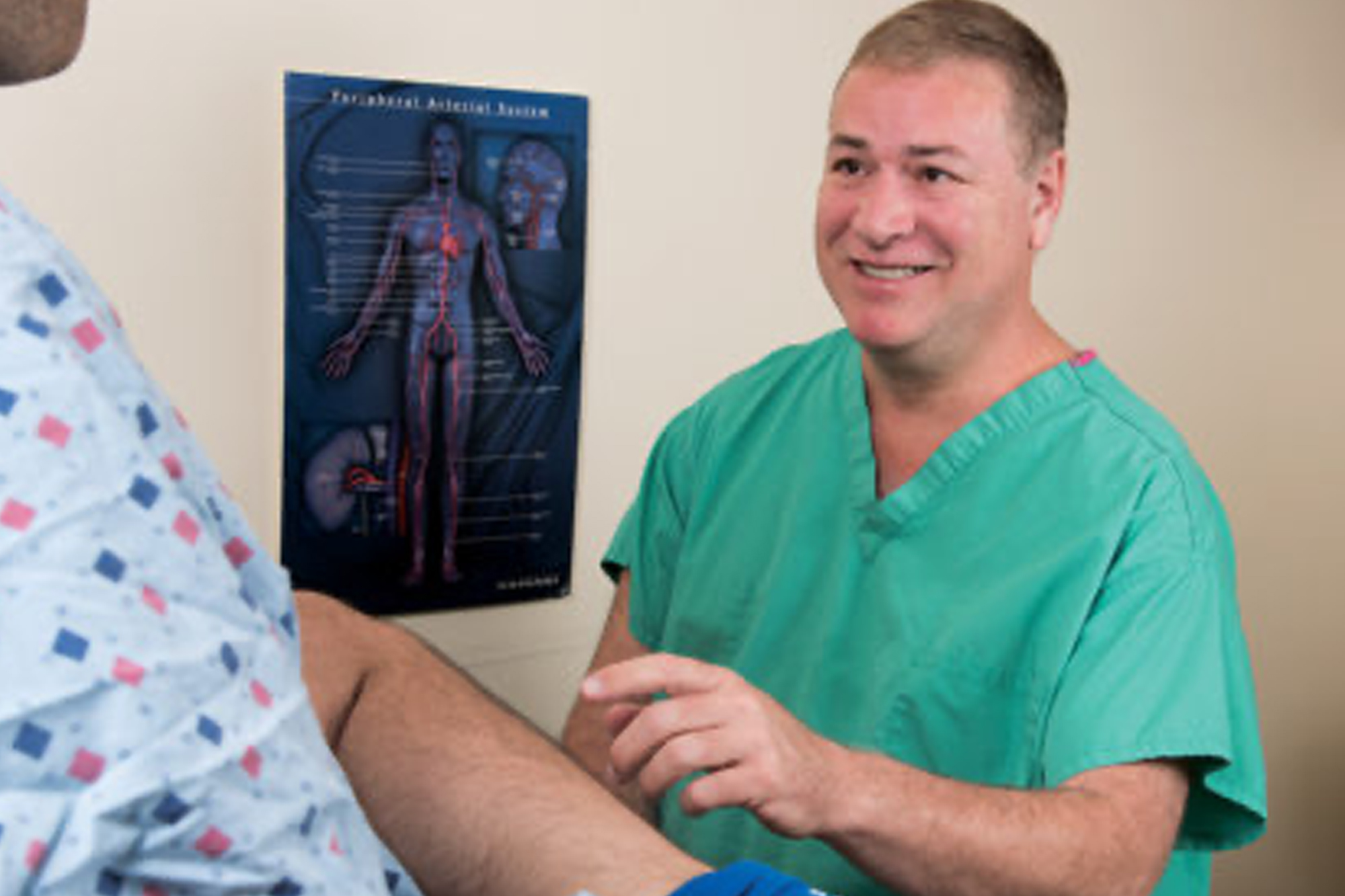
What You May Have Already Tried for Your Venous Symptoms
If persistent leg swelling, pain, or skin changes have been affecting your quality of life, you’ve probably been through a frustrating cycle of treatments. Many of our Norwalk-area patients come to us after trying:
- Compression stockings — they help manage symptoms, but if the outflow vein is blocked, compression alone can’t restore drainage
- Surface vein treatments (RFA, ClariVein®, sclerotherapy) — these effectively close damaged surface veins, but if a deep vein obstruction is also present, symptoms persist
- Leg elevation and diuretics — temporarily reduce fluid, but the swelling returns because the underlying venous blockage hasn’t been addressed
- Wound care for venous ulcers — weekly dressing changes manage the wound, but without fixing the drainage problem, the ulcer won’t close
- Being told nothing more can be done — some patients are told their swelling is chronic and untreatable, when in reality a deep vein obstruction is the missing diagnosis
Venous intervention and stenting addresses the piece of the puzzle that these other approaches can’t — the deep venous outflow obstruction. Once the blocked vein is opened and stented, blood can finally drain from your legs efficiently, and the chronic swelling, pain, and skin changes that have been holding you back can begin to resolve.
What to Expect During Venous Intervention and Stenting in Norwalk
Getting venous intervention and stenting at our Norwalk facility is a carefully coordinated cath lab experience. Here’s what the process looks like:
Follow-up visits at our Norwalk office confirm stent patency and monitor your symptom improvement. Many patients experience a noticeable reduction in leg swelling and heaviness within the first few weeks after venous intervention and stenting.
Deep Venous Expertise You Can Trust
Dr. Barry Zadeh, a board-certified cardiothoracic surgeon, and our cath lab team specialize in diagnosing and treating deep venous obstructions that other providers often overlook. Using intravascular ultrasound and the latest dedicated venous stent technology, we find the blockages hiding beneath the surface — and fix them.
Told Your Swelling Is Something You Just Have to Live With?
A deep vein obstruction may be the missing diagnosis. Schedule your complimentary screening at Ohio Vein & Vascular in Norwalk and find out if venous intervention and stenting can finally provide the relief you’ve been looking for.
Ohio Vein & Vascular – Norwalk
Suite C,
Fax: (419) 668-1145
Email: info@loveyourveins.com
