
Atherectomy Treatment in North Canton, OH
Advanced cath lab plaque removal that restores blood flow to your legs — minimally invasive, same-day, and performed by board-certified vascular specialists.
Can’t Walk Like You Used To in North Canton?
If leg pain, cramping, or fatigue forces you to stop and rest every few minutes when walking — or if you’ve noticed that wounds on your feet or lower legs are taking far too long to heal — you may be dealing with peripheral artery disease (PAD). PAD occurs when plaque — a buildup of cholesterol, calcium, and other substances — narrows the arteries in your legs, starving your muscles and tissues of the blood flow they need.
Atherectomy is a minimally invasive cath lab procedure that physically removes that plaque from inside the artery, restoring healthy circulation to your legs. At Ohio Vein & Vascular in North Canton, our board-certified vascular specialists perform atherectomy using state-of-the-art image guidance — and most patients go home the same day with significant improvement in their symptoms.
What Is Atherectomy? How Does It Work?
Atherectomy is an advanced endovascular procedure that removes plaque directly from the inside of a blocked or narrowed artery. Unlike balloon angioplasty — which pushes plaque to the side — atherectomy physically shaves, sands, or vaporizes the buildup, creating a wider, cleaner channel for blood to flow through.
The procedure is performed in our cath lab using real-time image guidance. Your vascular specialist advances a thin catheter through a tiny incision — typically in the groin or lower leg — and guides it to the blocked artery. At the tip of the catheter, a specialized device removes the plaque using one of several techniques: rotational (spinning blade), orbital (diamond-coated crown), directional (cutting tip), or laser (vaporization). The specific device is chosen based on the type, location, and severity of your plaque.
Atherectomy can be performed on its own or combined with angioplasty and stenting to achieve the best possible result. By removing the plaque first, the artery is better prepared for any additional treatment — leading to more durable, longer-lasting outcomes. The entire procedure is performed under local anesthesia at our North Canton facility, and most patients return home the same day.
Why Patients in North Canton Choose Atherectomy
Atherectomy offers distinct advantages for patients with arterial plaque buildup — especially those with tough, calcified blockages that don’t respond well to other approaches. Here’s why our North Canton patients choose it:
Removes Plaque Directly
Unlike angioplasty which pushes plaque aside, atherectomy physically removes it — creating a wider, cleaner channel and reducing the chance of re-narrowing.
Tackles Calcified Blockages
Hard, calcified plaque that resists balloon angioplasty alone can be effectively treated with specialized atherectomy devices designed for tough deposits.
Minimally Invasive
Atherectomy is performed through a tiny incision using catheter-based technology — no open surgery, no large incisions, and no general anesthesia required.
Same-Day Procedure
Most atherectomy patients go home the same day with little downtime — returning to normal activities far faster than traditional surgical alternatives.
Improves Walking Comfort
By restoring blood flow to the leg muscles, atherectomy often dramatically reduces the cramping and pain that forces patients to stop walking (claudication).
Promotes Wound Healing
For patients with non-healing foot or leg wounds caused by poor arterial flow, atherectomy can restore the circulation needed for tissue repair — a critical part of limb salvage.
Personalized Device Selection
Your North Canton specialist selects the atherectomy device best suited to your plaque type and artery location — rotational, orbital, directional, or laser — for optimal results.
Combines With Other Treatments
Atherectomy prepares the artery for angioplasty and stenting when needed — improving the durability and long-term success of the overall treatment plan.
What Conditions Does Atherectomy Treat?
Atherectomy is primarily used to treat arterial blockages caused by plaque buildup. At our North Canton clinic, we perform atherectomy for:
- Peripheral Artery Disease (PAD) — the most common indication; plaque in the leg arteries restricts blood flow, causing claudication (leg pain with walking), numbness, and cold feet
- Claudication (lifestyle-limiting leg pain) — cramping, aching, or fatigue in the calves, thighs, or buttocks when walking that improves with rest but keeps getting worse over time
- Critical limb ischemia — severe PAD where blood flow is so restricted that tissue begins to die, putting the limb at risk if circulation isn’t restored
- Non-healing wounds from poor arterial flow — foot or leg wounds that won’t close because the tissues aren’t receiving enough oxygenated blood to heal
- Recurrent or calcified blockages — tough, hardened plaque deposits that don’t respond adequately to balloon angioplasty alone
If you’re experiencing any of these symptoms or conditions, an evaluation at our North Canton office — including vascular imaging — can determine whether atherectomy is the right treatment to restore your circulation and protect your legs.
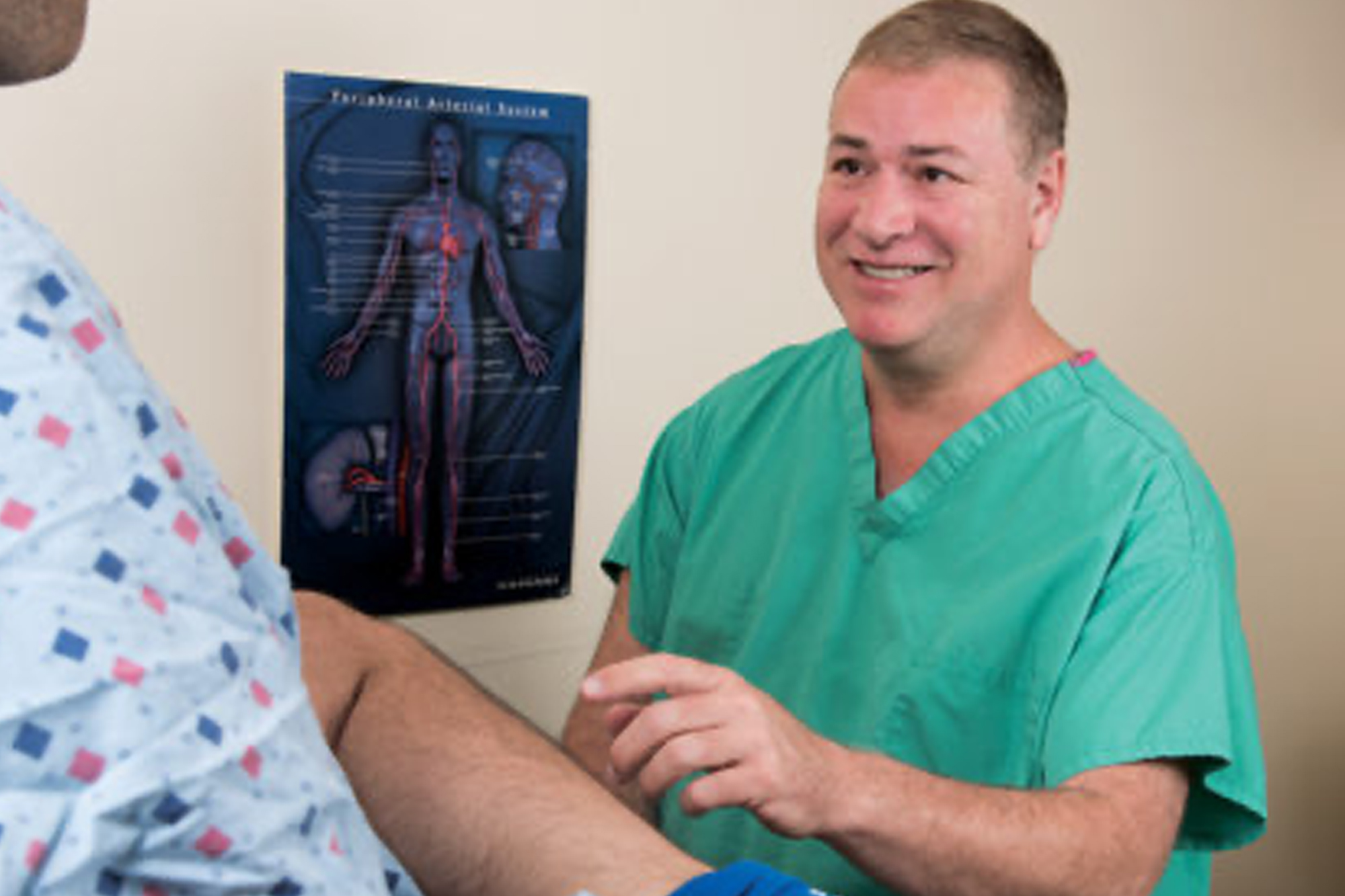
What You May Have Already Tried for Your PAD Symptoms
If leg pain, poor circulation, or non-healing wounds have been affecting your quality of life, you’ve probably already tried managing them. Many of our North Canton-area patients come to us after exhausting approaches like:
- Walking programs and exercise — helpful for mild PAD, but as blockages worsen, even short walks become painful or impossible
- Medications for cholesterol and blood pressure — essential for slowing PAD progression, but they can’t remove plaque that’s already blocking your arteries
- Wound care for non-healing sores — bandages and topical treatments address the wound surface but can’t fix the circulation problem preventing healing
- Avoiding activities that cause pain — walking less, giving up exercise, or becoming increasingly sedentary to avoid the cramping and fatigue
- Hoping the symptoms will plateau — unfortunately, PAD is progressive; without intervention, blockages typically get worse, not better
Atherectomy addresses the root problem by physically removing the plaque blocking your arteries. It’s not about managing symptoms — it’s about restoring the blood flow your legs need to function, heal, and feel normal again.
What to Expect During Your Atherectomy in North Canton
Getting atherectomy at our North Canton facility is a well-coordinated, minimally invasive experience. Here’s what the process looks like:
Follow-up visits at our North Canton office monitor your recovery and confirm improved circulation. Many patients notice a significant reduction in leg pain and improved walking distance within the first few weeks after atherectomy.
Experienced Atherectomy Specialists You Can Trust
Dr. Barry Zadeh, a board-certified cardiothoracic surgeon, and our vascular team bring extensive cath lab experience to every atherectomy procedure. With deep expertise in both surgical and endovascular techniques, we select the right device, approach, and treatment combination for your specific blockage — delivering the best outcome with the least disruption to your life.
Ready to Get Moving Again in North Canton?
Don’t let blocked arteries keep you on the sidelines. Schedule your complimentary leg screening at Ohio Vein & Vascular in North Canton to find out if atherectomy can restore your circulation and get you back on your feet.
